
Prime vs. Rustic Grade Hardwood: Is Prime Really Better?
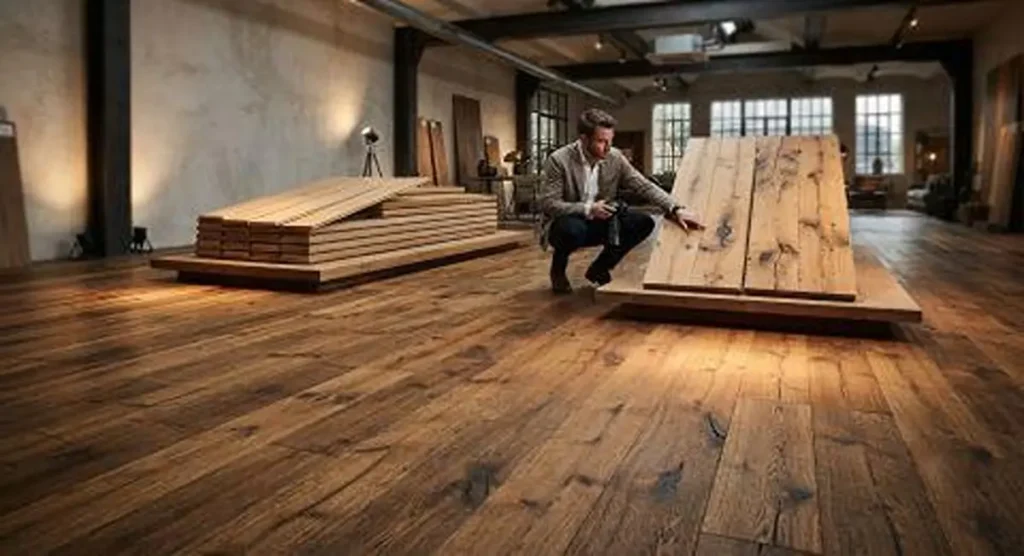
The biggest lie in the timber industry is the assumption that paying more for “Prime Grade” buys you a better floor. It doesn’t. It just buys you less nature.
For decades, sales reps have trained clients to view wood grading like a diamond certification: fewer knots and zero colour variation equals superior quality, while rustic is what you settle for when the budget gets tight.
That is absolute nonsense.
A rustic-grade engineered board shares the exact same core stability, wear layer thickness, and structural integrity as a clean prime board. The only difference is the yield at the sawmill. Prime isn’t “higher quality”—it’s just rarer because we reject the trees that actually have a pulse and a history.
When we tell clients that knots are a “defect,” we’ve failed as an industry. We’ve taught people to prefer wood that looks like printed plastic just because it’s uniform.If structural integrity is identical, why do we still penalise character in our pricing models? Are we selling timber, or are we selling fake perfection?
Let’s argue about it in the comments. Are you brave enough to tell your clients that knots are an upgrade, not a flaw?